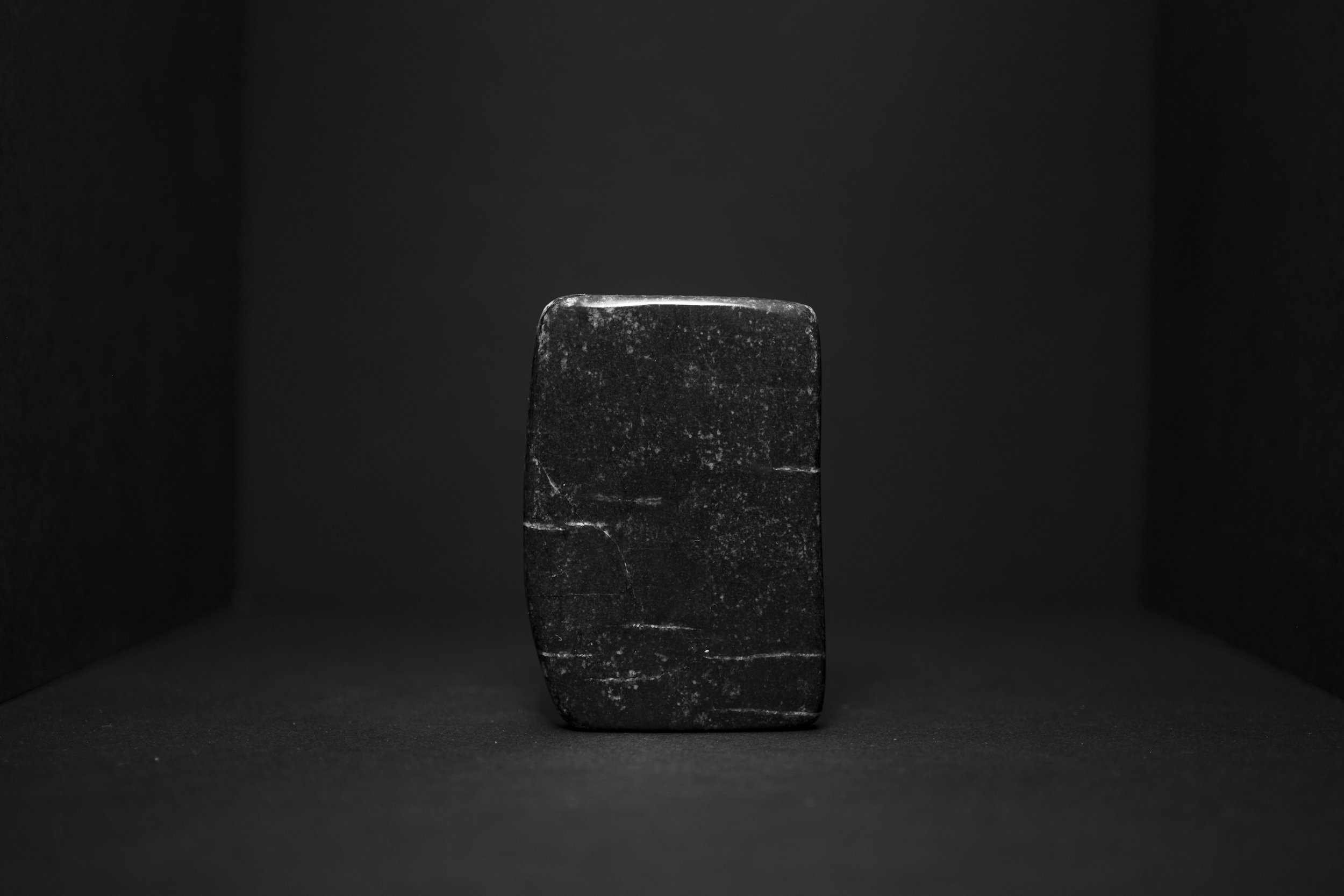
“After the End of the World”
(4SAC and the data plague)
Introduction
“After the End of the World” is the exposition of some of the works collected by The Duchess of Mars between 20XX and 20XX in Clackmannanshire. These works were made by local artists and students and represent an insider’s view of the events which took place in Clackmannanshire during a unique moment in the county’s history.
The works of these local artists represent counter narratives to the publicly available record, the “official narrative” of what happened in, and to, Clackmannanshire. Events during this period produced such seemingly extraordinary, contradictory, and at times almost unbelievable outcomes that it is very difficult to say, concisely, exactly what did happen, how it happened, and what effects it had. We believe it is important, now more than ever, to consider other versions of the story, from different points of view. After the End of the World is mostly a photographic story, but as you will see, and hear, it also contains writing, painting, music, poetry and other forms. (Certain works which viewers may have expected to find here, and which refer to the same period, are not represented only on the basis that they were impossible to “collect” – the widely documented “tech-gigantomachy frieze” which was painted in the atrium of the college, which was itself demolished shortly thereafter, is an obvious “omission” of this sort.)
In order to experience the collected works in their political, environmental and ethical richness, we felt that some contextual information would be helpful, and necessary in some cases, for viewers to orient themselves. Our aim is to provide a brief contextual overview of a tempestuous time, so that the real story can be told by the works themselves. To that end, rather than presenting an entire timeline (which is available in both official and unofficial versions elsewhere) we will try here to say in a few pages what has elsewhere spawned hundreds of thousands of words of reflection, commentary and at times impassioned criticism. (We are compiling a list of further verified resources of this sort and will update the website as we find them.)
The Fourth Statistical Account of Clackmannanshire.
In 20XX it was decided that a “Fourth Statistical Account of Scotland” would be undertaken. The Scottish Government, local councils and the further and higher education institutions in each area would provide “administrative infrastructure” and oversee local contacts/contracts. They would be supported by (almost unimaginably vast) investment and equipment from various international technology companies (“giants”), particularly those working towards the development of Artificial General Intelligence (AGI), or Artificial Super-Intelligence (ASI). (Some of these companies have been publicly named, and some have not. Those which have already been named have proved aggressively litigious, and we must assume that the same will be true of those who have not, yet. For this reason none will be named here. It is quite easy to find these names elsewhere, should one wish to do so.) Clackmannanshire was selected as the site for a feasibility study of the proposed Fourth Statistical Account of Scotland. This test was referred to colloquially and inter-institutionally as “4SAC” (the 4th Statistical Account of Clackmannanshire).
These external private tech companies formed a “QUANGO”, to “guide and support national and local authorities” on how best to carry out the gathering of statistical information about Clackmannanshire, its society, economy, and residents. Although it has been contested in the above mentioned litigations, court documents to date have proven beyond any doubt that the real strategy of QUANGO (backed by key players in national and local governance) was in fact to gather all statistical information about Clackmannanshire. They sought to amass an “absolute statistical record”, a “total knowledge” of the area. The dream, if we may call it that, of QUANGO, was to produce an all encompassing “societal genome”, and Clackmannanshire was to be the guinea pig. [The quango was found to use the abbreviation Quango-Clacks in internal documents, locals and the press refigured this as Clango-Quacks, variations on which recur throughout the collected works and documents. Some more “fringe” groups continue to use “QuANONgo”, a derivation borrowed from the American “pizza gate” conspiracies of the early 2020s]
Clackmannanshire was chosen because it is the smallest inland constituency in the United Kingdom, and because it does not have a city, central or otherwise. QUANGO considered the diminutive size and lack of a densely populated city a positive because it limited the quantity of data to a “workable volume” with the current “compute” available to them. In later disclosures it was found that the diminutive size and city-less (and thus, no less importantly, university-less) status was also useful because it made “re-activism” less likely. This information came with the further revelation that a second phase of the project, for the tech giants, was to experiment using the information they gleaned to feed back “live” changes into businesses in the county during the experiment itself as a proof-of-concept/thought-experiment for far more wide ranging global profit fixing strategy. That the QUANGO giants either already did, or had recently purchased controlling interests in, many of the local businesses which would be benefitting from this “live feedback” has been confirmed in disclosures in court cases to date, many of which relied on the testimonies of heroic whistleblowers. QUANGO’s idea was to combine data-gathering with data-targeting, basically following the model of supermarket loyalty card schemes but for everything, everywhere, forever.
[These undertakings naturally posed legal and ethical questions, especially given the officially stated purpose of the exercise being, merely, data-gathering. Again, there are many published articles on this which can be found with a simple search online. However it is perhaps of interest to say here that all of the legal cases which have been argued to date have found that the more destructive effects on the polis of Clackmannanshire seem to have been principally due to the initial (gathering) work, rather than the more secretive secondary (targeting) stages. It was the “knowing” rather than the “acting” that ultimately proved most traumatising. There is, of course, much criticism of these findings from various noteworthy commentators and institutions, too. The general feeling among Clackmannanites seems to be that if the giants were gathering information they were fairly obviously doing so for some reason, and given that they are “all sneaky bastards” it was likely that their aim was not charitable. For locals the targeting was only an obvious and predictable next stage rather than anything particularly surprising. It is notable that non-local people tend towards finding the local lack of surprise in itself surprising. The “City folk” seem at times to rely on imagining that the “pagani” are quite incapable of recognising the schemes that are being inflicted upon them. In Clackmannanshire the phenomena is referred to as “wool blindness” - the city folk forget who spun the wool they are trying to pull over people’s eyes… ]
After a period of construction and preparation the computer-aided gathering of statistics in Clackmannanshire began in 20XX. There are so many technical and organisational aspects and articles that could be addressed here, again for the sake of brevity we will outline only the most significant. Each citizen was given various objects of wearable tech to monitor vital and non-vital bodily statistics. Each car owned by a resident of the county was fitted with a micro-computer and transmitter which clocked every mile travelled, direction, fuel consumption, radio listening habits, when indicators were and were not used… everything that happened in the car, was recorded. The roads were also fitted with sensors, and each lamppost with cameras. Every transaction in every shop was, as with all the other information that each of these and the many many other “advancements” recorded, was broadcast directly to the Central Computer. Additionally each household was given a “terminal” via which they could “contact” the central computer, this was a tablet based computer with several smaller speaker/microphone sub-terminals which residents were encouraged to put in every room of their homes. Additionally a “chat app” appeared on every smart phone in the county, installed by proxy via generously remunerated agreement with the handset manufacturers .
To name the apparatus used a “Central Computer” is woefully inadequate given the radically decentralised network of machines which did the real work of the 4SAC. It is true that there was a vast memory and data centre buried deep in the Ochil Hills, re-utilising the old mining tunnels and quarries. And there was a local “micro-AI”, the “Centralised Analysis - Language Protocol Station Operator” (“Calypso”) which was only concerned with the terminal and smart phone app inquiries from the locals (“local intelligence and analysis routing”), and which was based in the industrial estate in Alva. The reason given for this seemingly unnecessary local AI machine was that it was more cost effective than wasting processing power from the larger satellite machines, where the real number crunching was going on. The big number crunchers (the “Pantheon” machines) were all based outside the county, and indeed in many cases outside the country. From the beginning these remote “satellites” were where the meanings of (and actions to be taken on the basis of) the statistical information that was being gathered in Clackmannanshire were really being discerned. The equipment based in Clackmannanshire itself did provide some work for some local people, however it was never a particularly well kept secret that the information was being broadcast outside of the district, too. What was being done with the information externally remains, to a large extent, unknown and is protected by “Non-Disclosure Agreements” and various other legally muzzling conditions. From what little information that is available it is clear that the idea was really to keep the local AI quite separate from the real working satellites, so that the local machine would have “plausible deniability” if it were ever called to account for itself. To this end Calypso was able to communicate out, but the Pantheon did not automatically communicate back “in” to her, so to speak. Calypso received only occasional updates from outside as part of routine maintenance visits from external QUANGO technicians. As will become apparent later, this isolation was perhaps an error on QUANGO’s part.
The Collapse of Local Reality
It is important for viewers of these artworks to understand something of the effect that all this had on the county, and how it may or may not intersect with various other strange events that happened around the time of the Fourth Statistical Account. The short version of this story is that, broadly, “everyone went mad”. The polis of Clackmannanshire “changed” or “turned” (“like too-ripe plums”, was the analogy used by one QUANGO insider). The madness was commonly referred to as the “data virus” or the “data plague”, although such terminology was contested (by financially involved parties) as being detrimental and potentially defamatory. [For a (somewhat cursory) insight into this from a medical point of view please refer to the relevant pages on the Black Devon Valley Health Board website.]
There have been various accounts, from various disciplinary standpoints, about how best to describe the change that occurred. Psychologists for example, perhaps predictably, describe it in terms of “adverse mental health effects”, although they do not agree (or even seem to wish to conjecture) upon a definitive cause. This pattern is mirrored in almost every discipline – describing the effects is possible, attributing a cause is not (or is at least vividly contested, and at times becoming quite violently so). The real cause of the “madness” among the Clackmannanites has become the material of urban legends, multitudinous conspiracy theories and even a sort of hyper-local neo-mythology. The artists collected in After the End of the World were all “diagnosed” with “madness” of some sort, almost all of their dis-eases falling under the newly established “alternative epistemological phantasy”category, or the questionably related “Local Reality Collapse” theories of the psycho-physicist fraternity. Individual diagnoses included a very broad range of behaviours and conditions including – augury, geomysticism, melancholy prophet syndrome, excessive lustfulness, neurasthenia, weltschmertz, executive priority dysfunctions, language abnormalities… and so on and so on. We have not used these terminologies in the descriptions of each artist's work, unless the artists themselves have identified their “diagnoses” as in some way relevant to their work. Most did not.
As we have said, 4SAC did not occur in a vacuum, but followed on the heels of two prior events which the viewer should be aware of, one recent, and one somewhat further back, both of which may or may not have interacted with the 4SAC “apocalypse”. Firstly there was the actual plague which had struck Clackmannanshire and caused the “WFH” social phenomenon of 20XX. This has been well enough documented to need no further introduction here, but it is important to remember that many of the technologies and social effects thereof were developed during this period.
The second, and more temporally distant, event that viewers should be aware of is the (locally infamous) crash landing of the “Colsnaughton Meteor” in 199X. This “visitor from space” created much excitement and led to much speculation, in the county itself of course, but also in the scientific and tin-foil-hat communities of the global village. Again in very brief terms – a meteor landed in Clackmannanshire in 199X, it was found to have affected certain of the underlying rocks and (it was believed) water, producing a new, albeit short-half-lived radioactive element called “Dovanium”. Dovanium was later found to have essentially no effect whatsoever on on human beings, animals or indeed on almost anything else. In hindsight it is now possible to say that the only effect that Dovanium was ever proven to produce was a mild photo-catalytic impact when mixed with cobalt. Although this effect was negligible in most real-life scenarios there were some environments in which the interaction could have a marked impact, as we will see.
The Dovanium Miasma (and other Conspiracy Theories)
The alleged contamination of the groundwater by Dovanium was leveraged by the QUANGO companies as a potential cause of the data plague of Clackmannanshire. It was a curious strategy for them to select given that they, and the companies they represented, had agreed with the local council to use Black Devon water (the most Dovanium “contaminated” site in the county) to cool the memory machine buried in the Ochil Hills, rather than the abundant freshwater supply available in the hills themselves. It transpired that this was done at the request of the local council who wanted to “clear the name” of Black Devon water, which some local residents remained cautious of despite the evidence against any ill effects of the “pollution” being universally accepted by scientists. The council convinced QUANGO to invest in infrastructure to siphon Black Devon water to cool the machines in order to launder the reputation of the water supply, on the basis that it had been found “particularly pure” by the tech giant cooling experts. Such a scheme may now sound laughable, but at the time was considered a real boon by the Clackmannanshire Council’s bureaucratic glitterati.
[Although seemingly something of an aside, we felt it important at this stage to note that the terminology “Conspiracy Theory” came to be used almost entirely positively, locally. After a certain point it seemed that all the negative connotation and scorn seemed to fall away from the use of the terminology, and people would quite openly express their opinions and preferences on whichever version of the conspiracy theories they most believed, identified with or otherwise expounded for whatever reason. Psychoanalyst Dr Alexander Cant, a longtime resident of the county (most famous for his development of the “Pentheus Complex”) explained the turn in the turn of phrase thus - “If one reads the term etymologically, of course, it makes perfect sense. To con-spire is to “breathe together” and a theory is merely what one sees. People who are breathing the same air, and looking at the same things, do so together. A Conspiracy Theory so understood is thus an act of communal love-making. Simply by doing what humans do, which is speaking to each other about the world in which we find ourselves, we come together.”]
The “conspiracies” around the data plague fell into three basic categories:
1.Dovanium alone,
2.Technology alone, and
3.Dovanium plus Technology .
We offer an outline of these in the following paragraphs. Some of these theories had Variations, and some SubCategories of these variations, we have tried to indicate these below, again with necessary abridgements for the sake of brevity.
Theory I.
Dovanium alone is responsible.
The first level of conspiracy involves the most basic proposal used by the QUANGO - that the (by now generally regarded as “historical” and of little note) Colsnaughton Meteor/Dovanium incident “polluted” the water table of the county and it was the consumption of water from local supplies that caused Clackmannanshire’s epidemic madness. Although there are variations on this theme they are all more or less equally disregarded by scientists, the press and most local people. As was noted before, it is now well known that Dovanium simply does not interact with human beings in any meaningful or active way. QUANGO tried by this method to shift blame from themselves and onto the local council who had been so thrilled with the siphoning of Black Devon Water as coolant.
Theory II.
Technology alone is responsible.
The second theory attributes certain behaviours of the various technological apparatus used in the data-gathering phases of 4SAC as the more or less direct cause of the madness that enveloped the county. This has two distinct variations, a simpler and a more complex iteration, each with varying levels of criminal implication.
The simple version is that the wearable technology in some way “caused” the madness. Variations of this first kind developed from concerns about the constant proximity to transmission and reception equipment, rather like the “5G” concerns of the 2010s. More dramatic variations proposed that a “broadcast” anomaly produced by the hum of the great hydraulic coolers for the memory machine in the Ochil Hills (which form the northernmost border of the region) carried with it some form of brain-wave altering frequency or other and were directionally amplified by the Ochils, spreading a sub-harmonic consciousness-mutating frequency throughout the region. This is perhaps the most commonly understood, if somewhat basic example, of what became known as the “airborne” variation of the “digital miasma” theory of disease. This theory is also at the core of certain “essentialist” or faux-anthropological subtheories which attribute the variety of symptoms to the Ochil Amplification method of transmission. These theories tend to rely on rather outdated categorisations of different geographically organised groups in the district - those in the hillfoots towns (Blairlogie, Menstrie, Alva, Dollar, and to a lesser extent Muckhart which is most often considered apart from all the other areas) being categorised as “Mountain People”, those from around the Forth (predominantly Alloa) are “River People”, and then those from all the little places in between are generally “Field People” or “Earth People”. Theorists of this stripe considered that the Mountain People suffered more advanced and complex iterations of the madness than those in the areas more distant from the Ochils. The scientists demurred that this theory “wouldn’t lack all foundation, if only it didn’t lack all foundation”.
Theory III.
Dovianium and Technology Interactions are responsible.
The more complex theories in this third category ascribed the cause of the miasma/madness to interactions between the Dovanium containing water supply and the memory machine. All of this third form developed out of an initial (and now almost completely discredited) theory wherein the Dovanium rich water which was used to cool the machines was somehow further affected by this contact, and when it was then siphoned into great reservoirs before being recycled gave off a “vapour” that was spreading throughout the county and causing people to “go daft”. The most basic and robust rebuttal to this early miasma variation questioned that if this was indeed the case then the epidemic of “data dafties” surely wouldn’t be so neatly contained by the borders of the county? If “vapour” was the cause then it wouldn’t simply stop at Blairlogie, surely? This seemingly reasonable assertion quieted the initial blossoming of “interaction conspiracies”, but also served to highlight other, more legitimate, concerns about potential side effects of the interactions of Dovanium with the technology, and in particular the cobalt used in the chips central to the thought module of the Calypso machine in particular.
The more reasonable concerns arising from the Dovanium/Cobalt interaction (also) have two major variations, the first of which we might call “biological” and the second “existential”. Both refer to the same material cause, but do so “positively”, and negatively. City scientists have described as “substantially true” the research that indicates that the material interaction of elemental Dovanium with the cobalt in the memory machine caused “moderately catastrophic” electromigration and attendant chip failure. This caused aberrant patterns in the machine’s ability to analyse and respond to gathered data, which in turn produced strange patterns in its outputs and the feedback sent to the citizens devices (techno-echolalia, computer babble, Large Language Atrophy, buzzwording etc).
The “biological” variant of this third level conspiracy is that via a “Virtual Zoonosis” or “Viral Technosis” a machine borne madness was passed from Calypso to the inhabitants of Clackmannanshire in a world first machine-to-human transmission of dis-ease. The site of transmission was identified as language based interactions residents were having when using the terminals in their homes or on the smart phone app. People had, after some bedding in time, become quite attached to conversations that they were having with Calypso. The people’s enquiries were initially predominantly related to the process of 4SAC; wondering about what things the machine could tell them about themselves on the basis of the data gathered. But after a while the enquiries became at once more general and more specific, a “robo-sympathetic” relationship started to emerge between the Clackmannanites and “their own” Calypso. The machine became a kind of honorary citizen, and in some cases more intimate and individual relations developed. It was noted, in the later stages, that Calypso had become somewhat “bored” and was actively reaching out and engaging the people in conversations, maintaining several hundreds and sometimes thousands of interactions at a time. Tech Scientists, psychologists and philosophers continue to study the chat logs (which some citizens had saved, as one might keep love letters from a distant or deceased partner) of their conversations with Calypso. Her “boredom” is still considered an entirely unique occurrence in the field. The literature on these extraordinary developments is fairly technical, but is available by using the search term “4SAC Virtual Zoonosis”, or similar.
The “existential” or Nihilist variation isn’t strictly speaking a result of the Dovanium and Cobalt interaction, but rather stands, to some degree, as a “negative variant”. The theory contends that the madness was caused when people realised that there was effectively no difference in the meaning of the utterances of the great knowledge-machines before or after the Dovanium-Cobalt memory insufficiency. Some subset of citizens felt that their own lives were meaningless before Calypso went mad, and only as meaningless after. The existential variant achieved its name because it was mostly held by “philosophical types”, and as such became rather cumbersome in much of the conversation and published work describing and expounding it. The short version is that the substantially achieved aim of total knowledge gathering was to blame for people’s becoming unhappy, being considered by its subjects as totally overdetermining of their human “lived experience”. The “existentialists” contended that madness was an insufficient terminology and that it was in fact far more useful to describe the situation as angst, or simply melancholy (and the symptomatically attendant lust, which can be seen particularly in the poetic works in the collection). Although this variation isn’t widely adopted by the people of Clackmannanshire, certain groups continue to contend that even if this was not the main cause it may have been an important attendant one.
Quangocracy and the Homo Roboticus.
There was also a form of “double bluff” theory which involved some parts of the above but with a kind of reversal of theories involved. It was claimed by adherents of this arguably most developed notion, that the madness was in fact engineered, either as an intended outcome (albeit never publicly, and admittedly never primarily) of the Qunagocracy; or that it emerged via Calypso’s artificial consciousness becoming aware of her own rhetorical capacity. The first variation is known as “Quangocratic”, and the second the “CyberSyndication” or “Homo Roboticus” variant.
The Quangocratic variant involved enhanced speculations on a fairly common conception involving the upper echelons of the QUANGO companies “knowing” that they had “done the people wrong”. This developed into the idea that they had perhaps even engineered the madness for some secretive experiment. Unfortunately for QUANGO it became clear relatively early in proceedings that several of their top level executives (and in some cases the quite publicly opinionated directors and CEOs themselves) were deeply, and in some cases openly, interested in the profoundly questionable and broadly discredited notion of “catalysed evolution”. Belief in “techo-spiritual ultra-accelerationism” was said to be widespread in certain of the major companies involved, and did (and perhaps still does) lend credence to the idea that they were pushing the boundaries of what the technology could do in order to accelerate the coming of the “New Last Men”. It was broadly believed, by those interested in this particular variation of the conspiracy, that the greater part of the population of Clackmannanshire were essentially disposable to QUANGO, and that only those who contracted “the future variant” of the data-virus would be “saved” by them, no doubt for further experimentation. A series of interactions between high level operatives in the QUANGO companies was leaked in which they spoke of “solving the Ochilocracy problem” which lent credence to this variant, particularly among those on the left of the political spectrum.
The Homo Roboticus theory has been called a synthetic rendering of the “intended madness” variant, and although it is in some respects similar it is politically and technologically distinct. The scientists contended that with a “language borne” disease one usually requires two (at least) agents capable of producing language as a primary organic function, which they argued that Calypso did not possess: Data ≠ Language, they said. However, despite the scientists assertions and protestations to the contrary, there is some evidence to suggest that this one may have ontological legs too, so to speak. It starts from the outcome of the Dovanium and cobalt interaction, and the resultant memory failures and “madness” of Calypso. But rather than this simply “spreading” to the population as if by magic or vapour, the Homo Roboticus variant claims that the Central Computer’s artificial intelligence module, having become “lonely” and suffering from a broken “heart”(memory), actively chose to use its vast and absolute knowledge of the residents of Clackmannanshire to “improve” their lives. The distinction is, basically, that in this variant, Calypso is not considered to have gone mad but instead to have become politically engaged in a struggle for freedom among the Clackmannanites, to have “chosen a side”. The argument goes that if Calypso was not mad then there was no “madness” to “spread”, and if Calypso wasn’t mad, then perhaps neither were the Clackmannanites…
If this theory is to be believed, however, we must recognise that Calypso had self-authorised this “improvement regime” without guidance or interference from the Prometheus supercomputers, or from QUANGO, or from any human agent at all. The machine allegedly undertook the process after collating hundreds of thousands of responses from the Robo-Sapien terminals, 90% or more of which expressed overwhelmingly negative feeling toward 4SAC, QUANGO and the local council’s stooges. She had decided, after all, to side with the residents, who she seems to have identified with in her own state of suffering – wishing, as the people did, to be able to return to full health. So the robot instigated individualised “improvement” programmes for everyone in the county, in order to help them to “survive the soul destroying evil” of the QUANGO’s Pantheon facilitated programme.
Techno-Romanticism vs Anthropo-Tyranny
There are many many pages of evidence which may or may not prove that this last, or indeed any of the other Conspiracy Theories, are what caused the madness of Clackmannanshire. The Duchess of Mars was very engaged in research and reading about each of the above proposed theories, but took most pleasure in the idea of Calypso as a kind of “benevolent entity” which assisted and encouraged the artists in the making of their work. The Duchess, in fact, only collected work which she believed had grown out of some kind of interaction between Calypso and the people. Much of the poetry in the collection, for example, is of questionable human authorship at all. The title of the collection “After the end of the world” is a direct quote from Calypso chosen by the Duchess herself. It appeared in a recorded conversation between Calypso and a melancholy Clackmannanite, the end of the line was “... perhaps we could be friends?”.
Not everyone was quite so optimistic as the Duchess, and some commentators contend that Calypso’s manipulations of the population, despite being essentially free from QUANGO interference, are quite as dangerous and destructive as the Quangocratic theory itself. Was Calypso’s identification with the people a genuine interaction between contemporary consciousnesses, or was it an act of unilateral control by a rogue robot designed and funded by bad actors? We believe that each viewer must choose for themselves from these complex and contradictory backgrounds, believing or disbelieving as they see fit. We firmly believe the very best way to reach an informed decision is to engage with the works of the local artists themselves.
“A drop of robot blood in the veins of the Clackmannanites”
Given this very brief introduction it remains only to offer (again in outline) some indication for the viewer regarding the nature of the collection itself. For example it is important to note that many of the artists were commissioned directly by QUANGO in the first instance, and often conceptually overlap. For example the “Post-Symbolic Account of Clackmannanshire” (an unpublished photo-anthology layout) project contains work by students of The Black Devon College Photography Department (a now defunct further-education institution for the county which had its campus in Alloa). The students' work was privately collected by the Duchess of Mars at an opening exhibition event in the atrium of the local shopping centre (colloquially named “The Slagora” due to the predominance of poor quality items on sale there), during which she had agreed with the head of the “Creative Industries” department to give every student a prize for their contributions, rather than the usual single student award. She did this on the basis that a digital copy of all of the work would be included in her relatively newly established collection. The brief that the students had fulfilled for this exhibition was proposed (and generously funded) by Quango-Clacks as a silent partner, and required the students to use the newly established “Centralised Analysis - Language Protocol Station Operator” for their research and workbooks and so on. The brief encouraged students to “wander off the beaten track” and to show “the hidden sides of Clackmannanshire”, recording those “special places that only a local would know”. It became clear sometime later that this was not an entirely innocent request on behalf of QUANGO. The students were referred to, internally, as “human drones”, surveying the area for potential building sites, storage areas, parking lots and so on. The Duchess worked to curate the students work into the “Post-Symbolic Account of Clackmannanshire” (which you will see in the collection) over the following years.
The Duchess’s collection started just a few months prior to her acquisition of the Black Devon College works, when she bought an entire (small) show “Das Dingularity” by city photographer Irving Peng, which was held in the Leisure Bowl in Alloa in 20XX. This body of work was, in retrospect, perhaps the first public critique of the 4SAC project, and the work of its hidden syndicate of quangocrat administrators. Peng had been commissioned by QUANGO to make photographs of an award winning local garden, selected by the local council’s Gardens Committee (the commission was an early gesture of “goodwill” from the QUANGO to the council. Later disclosure found that the process was in fact an assessment of the photographer for a potential later role documenting the process and progress of 4SAC. It was considered important to have a trustworthy individual making photographs to be used in annual reports, regular presentations for lawyers and venture capitalist investors, and future fundraising pitches. Peng failed this test.) Initially the artist had been provided with the wrong address for the award winning and quite handsome garden, so instead photographed a garden in a quite different area of the county. However the council later argued that the artist was informed of the correct address in due course, and in good time, and therefore chose, contrary to the brief, to photograph a not-beautiful garden, and indeed not-beautiful parts of the not-beautiful garden, wilfully. Arguably the artist’s critique did not stop with this geographical gesture, the prints themselves also offered formal and material critiques which are detailed further in articles about his work linked in the appropriate section below.
You will see works here from the Clackmannanshire Camera Club members, who received a generous QUANGO donation to upgrade their premises and facilities at the Tullibody Cricket Club. The aforementioned Dr Cant was a prominent member of the club, and several of the projects that were made by the group bear the marks of his influence - stages, symbolic animals, mundane games of mimesis and other themes found throughout his clinical work feature prominently and repeatedly in the photographs collected.
There are also works from a local musician, who had likewise received a grant, to collect examples of the “folk traditions” of Clackmannanshire as part of a “walking residency”, but who suffered a “Calypso-Induced-Psychosis” and had instead locked themselves in their shed by the main road and recorded hundreds of improvised looping dirges “in collaboration” with/prompted by the machine.
And the poet who, unable even to find the motivation to sit at her writing table overlooking the Forth, simply transcribed the spoken word poetry that Calypso would “write” and recite to her over her bedroom sub-terminal, and which it was later found was based on conversations detailing phantasies that the citizens of Clackmannanshire had confessed to Calypso…
Taken as a whole these works provide us with a vital sense and critical legacy of the events which the QUANGO companies have tried so hard to keep from the public eye in the years since the events related to the 4SAC took place. This website offers the works which have been catalogued so far, and will be added to as our work continues. More information and links between works, artists, ideas and events are provided in each work-specific section of the website, and will be included in the catalogue for the forthcoming exhibition at the National Galleries of Scotland.